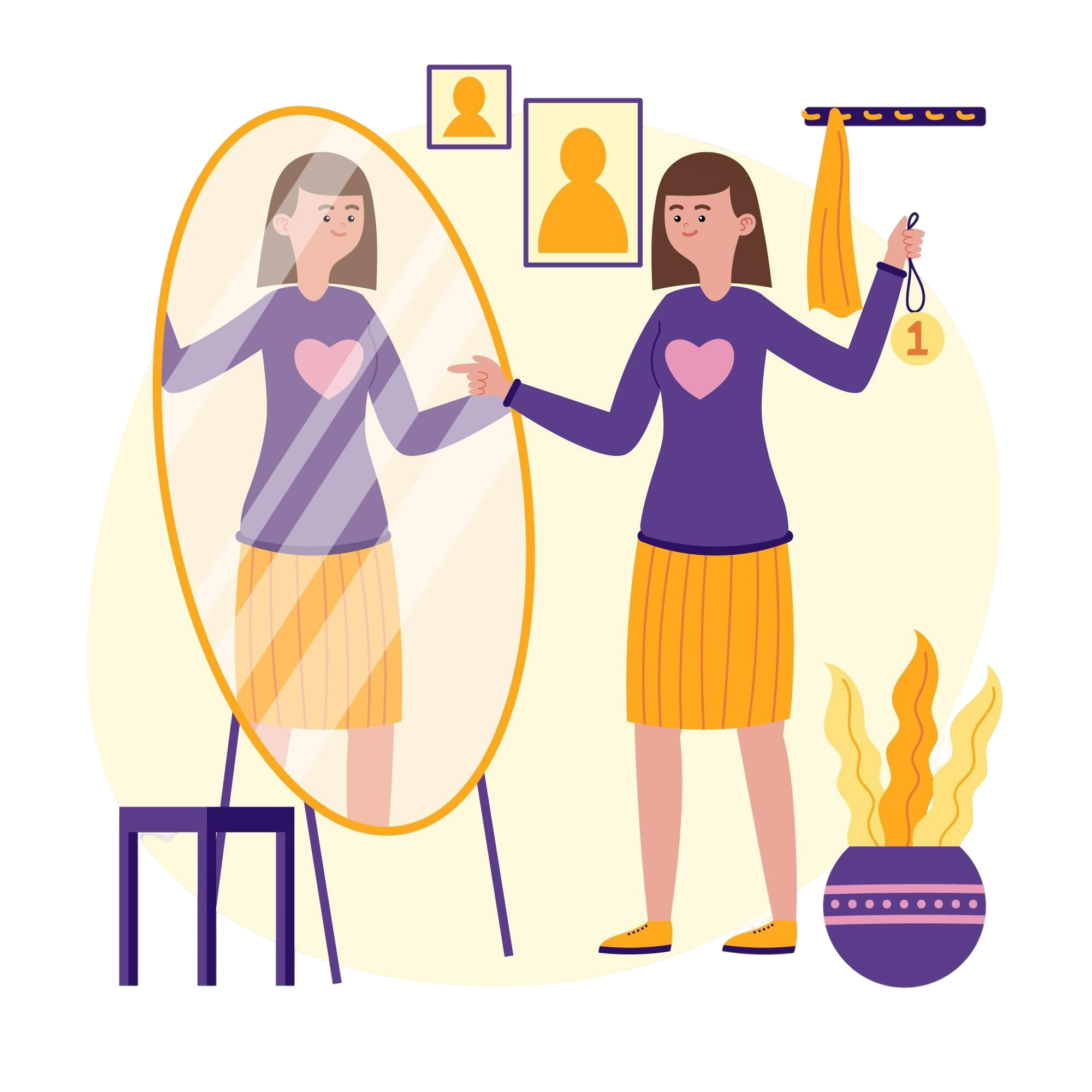
You probably know it's there. That quiet voice that says you're not good enough — not smart enough, not likeable enough, not worthy of the things you want. You might dismiss it as just being self-aware or realistic. But there's a real difference between honest self-appraisal and chronic self-doubt, and for many people struggling with low self-esteem, the signs are hiding in plain sight.
Low self-esteem is not just shyness or introversion. It's a persistent, largely automatic belief system about who you are and what you deserve. It shapes how you speak to yourself, how you behave in relationships, what opportunities you pursue, and what treatment you silently accept from others. And because it usually develops slowly — across years of experience — most people don't realise how deeply it has shaped their lives until they finally start to look.
This guide breaks down 12 of the most common signs, including some that rarely get discussed. More importantly, it shows you what each sign looks like on the surface versus what is actually driving it underneath — because low self-esteem is often a hidden condition wearing a very convincing mask.
What Exactly Is Low Self-Esteem?
Self-esteem is your overall felt sense of your own worth. It's built from thousands of small experiences: how you were treated growing up, whether you felt seen and valued, how you handled setbacks, and what messages you absorbed about yourself from school, family, peers, and culture.
Low self-esteem develops when those experiences leave you with a deep, largely unconscious belief that you are fundamentally not enough — not loveable, not capable, or not deserving of good things. This isn't the same as low confidence in a specific area, like public speaking. It's a global belief about your worth as a person.
The challenge is that these beliefs don't announce themselves. They operate silently through patterns of thought, behaviour, and emotional reaction that feel completely normal — because they've always been there.
12 Signs of Low Self-Esteem
Here are the most common signs. Some you may recognise immediately. Others might surprise you.
The Mask and the Mirror – What Others See vs What You Feel Inside
One of the most important things to understand about low self-esteem is that it rarely looks the way people expect. Many people with low self-esteem appear perfectly capable — even confident — to the outside world. The real experience lives inside, hidden behind behaviours that serve as protective masks.
These six cards show each sign's outward presentation alongside the inner reality that drives it.
You apologise for your opinions, for taking up space, for asking questions, for existing inconveniently. Friends may gently tell you to stop saying sorry so much.
You say yes to almost everything. You're the dependable one — always available, rarely with an opinion of your own. People love having you around.
You deflect compliments, attribute your success to luck, and minimise your accomplishments. People admire what looks like humility.
You research things thoroughly before deciding, rarely volunteer for new opportunities, and seem comfortable staying in familiar routines.
You work hard and hold yourself to a high standard. You rarely submit anything you're not completely satisfied with. You seem ambitious and diligent.
You notice details others miss, read social cues carefully, and always seem tuned in to how people around you are feeling in any room.
The gap between the mask and the mirror is where self-esteem counselling does its most important work — helping you understand what's actually driving the behaviour you show to the world.
Healthy Self-Esteem vs Low Self-Esteem
It helps to see these patterns side by side. This table shows how the same life situation looks very different depending on your underlying relationship with yourself.
| Life Situation | Healthy Self-Esteem | Low Self-Esteem |
|---|---|---|
| Receiving a compliment | "Thank you, I worked hard on that." | "They're just being polite. I don't deserve it." |
| Making a mistake | Learns, adjusts, moves on | Replays it for days; defines self by the failure |
| Someone disagrees | Engages, considers their view | Takes it as personal rejection or an attack |
| A new opportunity | Evaluates it with realistic confidence | "I'll fail. I shouldn't even put my hand up." |
| Setting a limit | Asserts needs clearly and calmly | Cannot say no; fears rejection or conflict |
| Being alone | Comfortable with own company | Self-critical, restless, constantly seeks distraction |
| Others' success | Feels genuinely happy for them | Triggers comparison, inadequacy, and shame |
How Low Self-Esteem Deepens Over Time
Left unaddressed, low self-esteem doesn't stay static. It tends to deepen through a self-reinforcing cycle — each stage narrowing your world a little further until the pattern becomes very hard to break without support.
Early Signs — Sensitivity and Self-Doubt
Occasional self-criticism, difficulty accepting praise, mild avoidance of criticism. Manageable on the surface. Most people brush it off as simply being hard on themselves.
Avoidance Patterns — Playing It Safe
You start limiting yourself — avoiding certain social situations, not going for promotions, staying in relationships that feel safe rather than genuinely fulfilling. The world gradually gets smaller.
Identity Erosion — Losing Track of Who You Are
After years of people-pleasing and self-silencing, you realise you don't know what you actually want, value, or believe. You've been living for others' approval for so long your own voice has gone quiet.
Deep Impact — Depression, Anxiety and Relationship Breakdown
At this stage, low self-esteem has become a clinical concern. Professional support for self-esteem is not just helpful — it is the most effective path forward. Patterns at this depth rarely resolve on their own.
Self-Assessment Checklist
Go through this list honestly. If five or more of these statements resonate with you, it's worth exploring low self-esteem counselling as a meaningful next step.
- I frequently criticise myself for things that others would easily forgive
- I find it genuinely difficult to accept compliments without deflecting or dismissing them
- I often agree with people even when I privately disagree, to avoid any conflict
- I have turned down opportunities because I assumed in advance that I would fail
- I compare myself to others regularly and almost always come up lacking
- I apologise frequently — often for things that are genuinely not my fault
- I feel as though I need to earn my place in relationships and friendships
- I have stayed in situations — jobs, relationships — where I was treated poorly because I didn't think I deserved better
- Criticism, even mild or well-intentioned feedback, feels disproportionately devastating
- I often feel like a fraud — as if I'll be "found out" — even when I'm genuinely succeeding
How Counselling Helps With Low Self-Esteem
The patterns described above don't change through force of will alone. They developed over years and are reinforced by deeply held beliefs about yourself that live below conscious awareness. Self-esteem counselling works because it helps you access and change those beliefs — not just manage the surface behaviours that sit on top.
Identifying Core Beliefs
A counsellor helps you trace your self-critical thoughts back to their origins — the early experiences and messages that formed your beliefs about your own worth.
Challenging the Inner Critic
CBT gives you practical tools to examine the accuracy of your self-critical thoughts and replace them with more realistic, balanced, and fair assessments of yourself.
Building Self-Compassion
Compassion-focused therapy teaches you to treat yourself with the same warmth you would extend to a close friend — a skill that doesn't come naturally when self-esteem has been low for years.
Improving Relationships
Counselling for self-esteem helps you recognise people-pleasing and boundary patterns, and begin practising healthier ways of connecting with and asserting yourself with others.
Rebuilding Your Identity
For people who have spent years self-silencing, counselling helps you rediscover what you genuinely value, what you actually want, and what kind of life feels truly authentic to you.
Long-Term Resilience
The goal isn't just to feel better temporarily — it's to build a stable foundation of self-worth that is no longer contingent on others' approval, external performance, or outcomes.
At Ninad Counselling Centre in Dehradun, our self-esteem counselling is tailored to your specific patterns and personal history — not a generic programme. Sessions are available in-person and online.
Frequently Asked Questions
What are the most common signs of low self-esteem?
The most common signs include constant self-criticism, difficulty accepting compliments, people-pleasing behaviour, avoiding challenges, excessive comparison with others, over-apologising, sensitivity to criticism, and feeling unworthy of good things.
Can someone have low self-esteem but still appear confident?
Yes. Many people with low self-esteem develop a confident exterior as a coping mechanism. This is sometimes called fragile or contingent self-esteem — it depends entirely on external validation and can collapse when challenged or criticised.
What causes low self-esteem?
Low self-esteem typically develops through a combination of critical parenting or childhood neglect, bullying or social rejection, academic or professional failures, trauma, chronic stress, and negative cultural messages about appearance, success, or worth.
Is low self-esteem the same as depression?
No, but they are closely linked. Low self-esteem is a persistent negative view of oneself, while depression is a clinical condition involving mood, energy, and physical symptoms. However, chronic low self-esteem significantly increases the risk of developing depression and anxiety.
How do I know if my self-esteem is low or if I am just being realistic?
Low self-esteem tends to be global — "I am not good enough as a person" — and resistant to positive evidence. Realistic self-appraisal is specific — "I didn't do well in this particular task" — and updates when new evidence appears. If your inner critic never lets up regardless of your achievements, that is low self-esteem.
Can low self-esteem affect relationships?
Significantly. Low self-esteem can cause people to accept poor treatment, become overly dependent on partners, push people away through jealousy or clinginess, avoid intimacy out of fear of rejection, or struggle to assert their needs clearly in relationships.
How long does it take to improve self-esteem through counselling?
Most people begin to notice shifts in their thinking patterns within 6 to 8 sessions. More lasting change in core beliefs typically takes 12 to 20 sessions depending on the depth and origin of the self-esteem issues. Some people benefit from longer-term therapeutic work.
Can counselling really help with low self-esteem?
Yes. Therapies like CBT, schema therapy, and compassion-focused therapy have strong evidence for improving self-esteem. They work by identifying and challenging the core beliefs that drive self-criticism, and helping you build a more stable, realistic, and compassionate relationship with yourself. Learn more about our self-esteem counselling approach here.