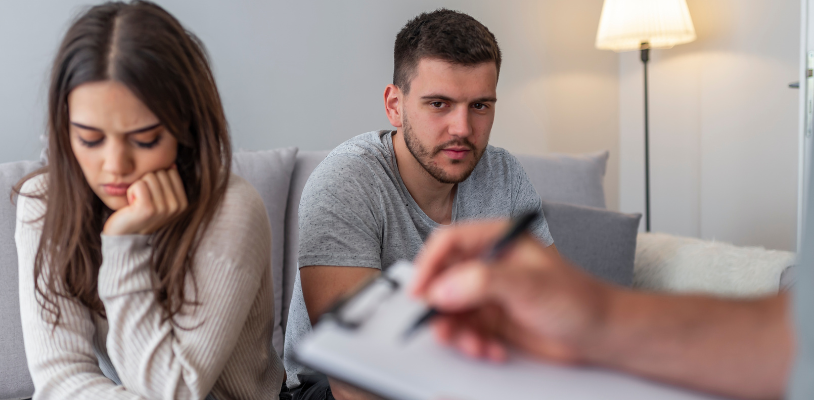
Understanding what marriage counselling involves and what the evidence shows
If you are asking yourself whether marriage counselling actually works, you are not alone. It is one of the most searched questions by couples who are struggling and considering whether professional help could make a real difference. The honest answer — backed by decades of research — is yes, for most couples who engage genuinely, marriage counselling does work. But what "work" looks like, how the process unfolds, and what makes it effective is often misunderstood.
This guide cuts through the myths and gives you a clear, evidence-based picture of what marriage counselling is, what the research says about its effectiveness, what to expect in sessions, the therapy approaches your counsellor might use, and the concrete benefits couples report after completing the process.
70–80%
of couples report significant improvement after marriage counselling
6 yrs
average time couples wait before seeking professional help
2×
more effective when couples seek help early, before patterns entrench
8–20
sessions is the typical range for meaningful, lasting improvement
What Is Marriage Counselling?
Marriage counselling — also called couples therapy or marital therapy — is a form of psychotherapy in which a trained therapist works with both partners together to address relationship difficulties, improve communication, and rebuild connection. Unlike individual therapy, the relationship itself is the focus. The counsellor creates a structured, neutral space where both partners can express themselves honestly, feel genuinely heard, and work collaboratively toward shared goals.
Marriage counselling is not about the therapist deciding who is right and who is wrong. It is not about listing grievances or relitigating the past. It is about identifying the patterns — the cycles of communication, emotional response, and behaviour — that are keeping both of you stuck, and developing new ways of relating that actually work.
Important distinction
Marriage counselling and marriage advice are not the same thing. A counsellor does not tell you what to do — they help you understand each other more deeply and build skills that allow you to find your own answers together.
Does Marriage Counselling Work? What the Research Shows
For couples wondering whether professional couples counselling is worth the investment, the research offers a clear and encouraging answer. Multiple large-scale studies and meta-analyses have examined the effectiveness of different couples therapy approaches. Here is what the evidence consistently shows:
- Emotionally Focused Therapy (EFT) shows a 70–75% recovery rate from marital distress, with improvements maintained at two-year follow-up
- The Gottman Method has been shown to accurately predict relationship outcomes and significantly improve relationship satisfaction when used therapeutically
- Cognitive Behavioural Couples Therapy (CBCT) produces significant improvements in communication, conflict resolution, and relationship satisfaction
- Couples who attend counselling together show better outcomes than those where only one partner participates
- Early intervention — seeking help when problems first emerge — leads to faster, more durable improvements than waiting until the relationship is in crisis
- Improvements in communication, emotional intimacy, and conflict management tend to persist after therapy ends, particularly when couples practise the skills they learn
The six-year gap
Research consistently finds that couples wait an average of six years from the time serious problems begin before seeking professional help. By that point, negative patterns are often deeply entrenched and much harder to shift. Seeking help early dramatically improves outcomes.
What to Expect in Marriage Counselling
Many couples feel anxious about their first marriage counselling session because they do not know what to expect. Understanding the typical structure removes that uncertainty. While every therapist has their own style and every couple's journey is unique, sessions generally follow a recognisable progression.
01
Assessment & Goals
Your first 1–2 sessions focus on the therapist getting to know both of you — your backgrounds, the history of the relationship, what brought you to counselling, and what each of you hopes to achieve. No problem-solving yet — just building trust and understanding.
02
Pattern Identification
The therapist helps you identify the underlying cycles — the emotional triggers, the reactions, the withdrawal or escalation patterns — that drive your conflicts. This "helicopter view" of what is happening is often the first real breakthrough for couples.
03
Skills & New Strategies
With clear patterns identified, the therapist introduces specific tools: communication techniques, de-escalation skills, ways of expressing needs without triggering defensiveness, and methods for rebuilding emotional and physical intimacy.
04
Consolidation & Maintenance
As progress becomes visible, later sessions focus on consolidating the changes, anticipating future challenges, and building the resilience to maintain improvements after counselling ends. Many couples also check in periodically for "maintenance" sessions.
Therapy Approaches Used in Marriage Counselling
When couples seek marriage and couples counselling, they often ask which type of therapy is best. The honest answer is that the most effective marriage counsellors draw on multiple evidence-based approaches, adapting their methods to what each couple needs. Here are the six most widely used approaches and what each is particularly good at.
EFT
Best for: Emotional disconnection & attachment wounds
Best for: Emotional disconnection & attachment wounds
Emotionally Focused Therapy
Developed by Dr Sue Johnson, EFT works by identifying and changing the negative interaction cycles rooted in attachment needs. It has one of the strongest evidence bases in couples therapy, with 70–75% of couples moving from distress to recovery.
Gottman
Best for: Communication breakdown & conflict
Best for: Communication breakdown & conflict
Gottman Method
Based on 40 years of relationship research by Drs John and Julie Gottman, this method identifies and addresses the "Four Horsemen" — criticism, contempt, defensiveness, and stonewalling — the key predictors of relationship failure.
CBCT
Best for: Negative thought patterns & behavioural cycles
Best for: Negative thought patterns & behavioural cycles
Cognitive Behavioural Couples Therapy
CBCT helps couples identify and challenge unhelpful thoughts and beliefs about each other and the relationship, while building new behaviours that increase positive interactions. Particularly effective for couples where criticism and assumptions dominate.
IBCT
Best for: Deep-rooted differences & acceptance issues
Best for: Deep-rooted differences & acceptance issues
Integrative Behavioural Couples Therapy
IBCT blends behavioural change techniques with emotional acceptance strategies. It helps couples accept genuine differences while still working to change harmful patterns — a powerful combination for long-standing marital difficulties.
Imago
Best for: Relationship history & childhood patterns
Best for: Relationship history & childhood patterns
Imago Relationship Therapy
Imago therapy explores how unresolved childhood experiences and unconscious patterns influence partner selection and relationship dynamics. It uses structured dialogue exercises that foster deep empathy and genuine understanding between partners.
Narrative
Best for: Reframing identity & shared story
Best for: Reframing identity & shared story
Narrative Couples Therapy
Narrative therapy helps couples externalize problems — separating the "problem" from the person — and re-author a new, more positive shared story. It is especially helpful for couples where blame and identity have become fused with the relationship's difficulties.
What Marriage Counselling Can Help With
A common misconception is that marriage counselling is only for couples on the verge of separation. In reality, couples seek professional support for a wide range of challenges — from specific crises to gradual drifting apart. Here are the issues that marriage counselling most commonly and effectively addresses:
Communication breakdown
Trust & infidelity recovery
Emotional distance
Recurring conflict cycles
Loss of intimacy
Financial disagreements
Parenting conflicts
Life transition stress
Feeling unseen or unheard
Unresolved past hurt
Growing apart over time
Illness & caregiving strain
Before and After Marriage Counselling: What Actually Changes
It can be hard to visualise what improvement actually looks like after couples counselling. This comparison outlines the real, concrete changes that couples typically report — not idealised outcomes, but the practical shifts that research and clinical experience show are achievable.
| Area | Before Counselling | After Counselling |
|---|---|---|
| Communication | Arguments escalate quickly; one or both partners shut down, shout, or withdraw | Conversations stay calmer; both partners feel heard without needing to fight to be understood |
| Conflict | The same fights repeat endlessly with no resolution; resentment builds with each cycle | Underlying needs are identified; conflict becomes a dialogue rather than a battleground |
| Emotional intimacy | Partners feel like strangers or housemates; emotional connection has eroded over time | Genuine empathy and curiosity return; partners feel emotionally present with each other again |
| Trust | Broken trust has created constant suspicion, guardedness, or walking on eggshells | A structured process for rebuilding trust is established; safety gradually returns to the relationship |
| Individual wellbeing | Both partners experience anxiety, sleep disruption, low mood, and chronic stress from relationship tension | Reduced stress, improved mood, and greater sense of security as the relationship stabilises |
| Future perspective | The future feels uncertain or hopeless; one or both partners considering whether to stay | Shared direction and hope return; both partners have tools to navigate future challenges independently |
Common Myths About Marriage Counselling — And the Reality
Misconceptions about what marriage counselling involves stop many couples from seeking help until problems have become deeply entrenched. Here are the most common myths — and what the evidence actually shows.
Myth: Marriage counselling is only for couples about to divorce
Reality
Most couples who attend counselling are not at the point of separation — they are struggling with communication, intimacy loss, or recurring conflict. The earlier you seek help, the better the outcomes.
Myth: The counsellor will take sides
Reality
A trained marriage counsellor is rigorously neutral. They do not decide who is right or wrong — they help both partners understand each other and identify the patterns that are keeping both of you stuck.
Myth: If my partner won't come, there's no point going
Reality
Individual sessions with a marriage counsellor can still create meaningful change. When one partner shifts their patterns, it often catalyses change in the other. Many reluctant partners join once they see real improvement.
Myth: Counselling means dredging up the painful past forever
Reality
While some reflection on history is useful for context, effective marriage counselling is largely skills-based and future-focused. The goal is to equip you with tools that work now and going forward.
Myth: Marriage counselling always prevents divorce
Reality
Counselling helps couples make clear, informed decisions. Sometimes the outcome is a renewed, healthier marriage. Sometimes it is a dignified, mutual decision to separate. Either can be a positive outcome when it is right for both people.
Myth: Strong couples don't need counselling
Reality
Many couples use counselling proactively — to deepen their connection, navigate a major life transition, or build communication skills. Seeking support is a sign of commitment, not weakness.
What Progress Looks Like: The Journey Through Marriage Counselling
When couples begin marriage counselling, they often want to know when they will start to see results. Progress is rarely linear — most couples go through a recognisable sequence of phases, each building on the last.
1
Sessions 1–3: Foundation
Building Safety and Clarity
Both partners feel nervous but gradually more at ease. The therapist maps out the relationship history and each partner's experience. Many couples describe feeling genuinely listened to — perhaps for the first time. The patterns start to become visible.
2
Sessions 4–8: Insight
Understanding the Cycle
The "aha" phase — both partners begin to see their own role in the recurring cycle, not just the other person's behaviour. This can be uncomfortable but is typically the most significant turning point. Arguments at home may temporarily increase before decreasing.
3
Sessions 9–16: Skills
New Ways of Relating
Concrete skills and tools are practised both in sessions and at home. Communication becomes noticeably calmer. Couples report catching themselves in old patterns and being able to interrupt them. Small positive interactions begin to rebuild genuine connection.
4
Sessions 17+: Consolidation
Lasting Change
Improvements become self-sustaining. Couples develop confidence in their own ability to navigate difficulties without always needing external support. The relationship feels qualitatively different — safer, warmer, and more connected. Sessions become less frequent as the work is internalised.
When Is the Right Time to Start Marriage Counselling?
The right time to start marriage counselling is almost always sooner than most couples realise. The six-year average wait represents a significant lost opportunity — six years in which negative patterns have time to deepen, resentment to accumulate, and emotional distance to grow. Research is clear: couples who seek help earlier need fewer sessions and achieve better outcomes.
You do not need to be in crisis to benefit from counselling. If you notice that the same arguments keep repeating without resolution, that emotional distance has crept into your relationship, that you feel unheard or misunderstood by your partner, or that trust has been damaged — these are the signs that professional support could help you now, before the situation becomes harder to navigate.
The best time to start is now
Many couples say they wish they had started marriage counselling years before they actually did. The problems that feel overwhelming after six years of entrenchment are often far more workable when addressed at the first signs of a persistent pattern.
Marriage Counselling Works — When You Give It the Chance
The evidence is clear: for couples who engage genuinely and consistently, marriage counselling produces real, measurable, lasting improvements. It does not require a crisis to justify. It does not require both partners to be equally ready. It requires only a willingness to try — to show up, to be honest, and to take seriously the possibility that things can be different.
If your marriage is struggling — whether subtly or significantly — reaching out to a qualified marriage counsellor is one of the most effective steps you can take for yourself, your partner, and your relationship.
Book a Marriage Counselling SessionFrequently Asked Questions
Does marriage counselling actually work?
Yes — research consistently shows that marriage counselling works for most couples who engage genuinely with the process. Studies show 70–80% of couples report significant improvement in relationship satisfaction after completing counselling. The most important factors are both partners' willingness to be honest, take responsibility, and practise skills between sessions. Counselling works best when couples seek help early, before resentment and emotional distance have become deeply entrenched.
How many sessions does marriage counselling take?
Most couples find meaningful improvement within 8 to 20 sessions, though this varies significantly depending on the nature and duration of the problems. Couples dealing with acute communication breakdown or a specific crisis may see significant change in 8–12 sessions. Couples working through long-standing patterns, trust damage, or deeper emotional wounds typically benefit from 16–24 sessions. Your counsellor will discuss a personalised timeline with you in your first session.
What happens in marriage counselling sessions?
In marriage counselling sessions, a trained therapist creates a structured, neutral space where both partners can speak honestly. Early sessions typically focus on understanding each partner's perspective, identifying core patterns, and agreeing on goals. Later sessions introduce specific skills and tools — such as communication techniques, de-escalation strategies, and emotional attunement exercises. The therapist does not take sides or make decisions for the couple — they guide the process.
Can marriage counselling help if only one partner wants to go?
Ideally both partners attend together, but individual sessions are still valuable if one partner is unwilling. When one partner works on their own communication patterns, emotional responses, and coping strategies, it often creates positive ripple effects in the relationship. Sometimes a reluctant partner becomes willing to join once they see concrete changes in their spouse. An experienced marriage counsellor can advise you on how to approach this sensitively.
What is the best type of marriage counselling?
The most widely researched and effective approaches include Emotionally Focused Therapy (EFT), Gottman Method Couples Therapy, and Cognitive Behavioural Couples Therapy (CBCT). EFT has one of the strongest evidence bases, with studies showing 70–75% of couples moving from distress to recovery. The best approach for any given couple depends on the specific issues involved. A skilled marriage counsellor will typically draw from multiple approaches to match your needs.
How much does marriage counselling cost in India?
Marriage counselling costs in India vary depending on the therapist's qualifications, location, and session format. Fees typically range from ₹800 to ₹3,000 per session for qualified counselling psychologists. Many therapists offer online sessions, which can make it more accessible. Consider the long-term cost of not addressing relationship problems — the investment in professional support is almost always more cost-effective than the alternatives.
When is it too late for marriage counselling?
It is rarely too late for marriage counselling, even in severely distressed marriages. That said, the earlier couples seek help, the easier and faster the process tends to be. Even when one or both partners are considering separation, counselling can still help — either by rebuilding the relationship or by helping the couple reach a healthy, dignified resolution. The one situation where counselling is not appropriate is when there is active domestic violence or coercive control — safety must come first.
What should I expect in the first marriage counselling session?
In your first marriage counselling session, the therapist will begin by getting to know both partners individually — your backgrounds, what brought you to counselling, and what you each hope to gain. They may ask questions about the history of your relationship, when problems began, and what each of you has already tried. You will not be asked to resolve everything in session one. The primary aim is to build trust, clarify goals, and begin to identify the patterns that need to change.