



Do you lie awake at night, your mind racing through tomorrow's worries, yesterday's mistakes, and fears that seem impossible to quiet? You are not alone. Anxiety at night and overthinking before sleep affect millions of people globally — and they are among the most common reasons people struggle to get restful, restorative sleep.
When the busyness of the day fades, your brain — which spent hours suppressing emotions — finally surfaces everything it set aside. That is why overthinking at night feels so intense and unstoppable. The good news is that these patterns are not permanent. With the right techniques and understanding, you can calm your mind, break the cycle, and sleep deeply again.
Why Do I Overthink at Night?
During the day, work, conversations, and constant stimulation keep your mind occupied. At night, when the distractions disappear, your brain tries to catch up — processing unresolved emotions, rehearsing past conversations, and projecting future scenarios. This mental "filing" is natural, but in people with anxiety, it spirals into a loop that feels impossible to exit.
Common triggers for overthinking at night include:
- Unresolved stress from work, relationships, or finances
- Fear of failure or uncertainty about the future
- Unprocessed emotions from daily events that were suppressed
- A deeply ingrained negative thinking habit that activates in silence
- Underlying depression that intensifies feelings of dread at night
- A nervous system that never fully deactivates from daytime stress mode
- Perfectionism or hypervigilance habits that stay "switched on" even in bed
Research published in Sleep Medicine Reviews found that anxiety disorders disrupt sleep quality in over 40% of adults. Poor sleep then worsens anxiety the next day — creating a self-reinforcing cycle that grows harder to break over time.
What Causes Anxiety Before Sleep?
Anxiety before sleep is different from general daytime worry. At night, your nervous system needs to shift from "fight-or-flight" into "rest-and-digest" mode — but for anxious minds, this transition does not happen smoothly. The brain interprets the quiet as a threat-signal, not a rest-signal.
Key causes of anxiety at night include:
Cortisol Spikes
Unmanaged daytime stress keeps cortisol elevated at night, blocking your body's natural wind-down response.
Screen Exposure
Blue light from phones and laptops disrupts melatonin production, keeping the brain stimulated when it should be resting.
Depression Link
Depression and nighttime anxiety are strongly linked. Low mood worsens catastrophic thinking after dark.
Caffeine & Alcohol
Caffeine after 2 PM and evening alcohol both disrupt sleep architecture and heighten 2–4 AM anxiety.
- Lack of a consistent bedtime wind-down routine
- Unresolved relationship or personal conflicts — see relationship issue counselling
- Symptoms of depression that feel more intense when alone in the dark
- Health anxiety — physical sensations feel more threatening when lying still
- Work burnout and chronic stress and anxiety with no daily decompression routine
Can Depression Make Nighttime Anxiety Worse?
Yes — significantly. Depression and nighttime anxiety share a deep neurological connection. When you are struggling with depression, the brain's threat-detection system (the amygdala) becomes hyperactive, especially in the absence of daytime distractions. This means dark, quiet, solitary nighttime hours trigger a surge of negative, hopeless, and fearful thoughts.
People with depression counselling needs often report that their lowest moods hit between 10 PM and 3 AM — a phenomenon sometimes called "nocturnal dysphoria." If your overthinking at night is consistently tied to feelings of hopelessness, emptiness, or worthlessness, this is a clear signal that depression may be at the root, not just stress.
If your nighttime thoughts include feelings of hopelessness, worthlessness, or persistent sadness alongside sleep problems, please speak to a depression counsellor. These are signs that need professional attention, not just sleep hygiene adjustments.
How to Stop Overthinking Before Sleep – 10 Proven Techniques
Stopping overthinking at night is not about forcing positivity or suppressing thoughts. It is about giving your brain a healthy, structured pathway to process and release the mental load. These techniques are used in anxiety and stress counselling and backed by cognitive behavioural science:
- Brain Dump Journaling: Write every thought, worry, and tomorrow's to-do list on paper before bed. This physically moves the mental load from your brain to the page — your mind stops "holding" it.
- Set a Scheduled Worry Time: Dedicate 15 minutes at 6 PM for deliberate worrying. When thoughts arise at night, remind yourself: "Worry time is over — I'll think about this tomorrow."
- 4-7-8 Breathing Technique: Inhale for 4 counts, hold for 7, exhale slowly for 8. This activates your parasympathetic nervous system and lowers heart rate within minutes.
- Progressive Muscle Relaxation: Tense and release each muscle group from your toes upward. Physical tension release directly reduces the mental anxiety feeding it.
- The 5-4-3-2-1 Grounding Method: Name 5 things you see, 4 you can touch, 3 you hear, 2 you smell, 1 you taste. This anchors your awareness to the present and interrupts the thought spiral.
- Cognitive Defusion: Instead of "I'm going to fail tomorrow," say "I'm having the thought that I might fail." This creates emotional distance from the thought without fighting it.
- Guided Sleep Meditation: Use free apps like Insight Timer or YouTube for 10-minute sleep meditations. Guided audio gives your brain a new focal point instead of its own thoughts.
- Avoid Screens 60 Minutes Before Bed: Blue light from phones suppresses melatonin and keeps the prefrontal cortex active — the very brain region responsible for rumination.
- Consistent Sleep-Wake Time: Your circadian rhythm regulates anxiety hormones. Irregular sleep schedules dysregulate cortisol, making nighttime anxiety significantly worse.
- Create a "Transition Ritual": Signal to your brain that the day is done — dimming lights, herbal tea, gentle stretching, or reading a physical book. Repeated rituals teach the nervous system to downshift.
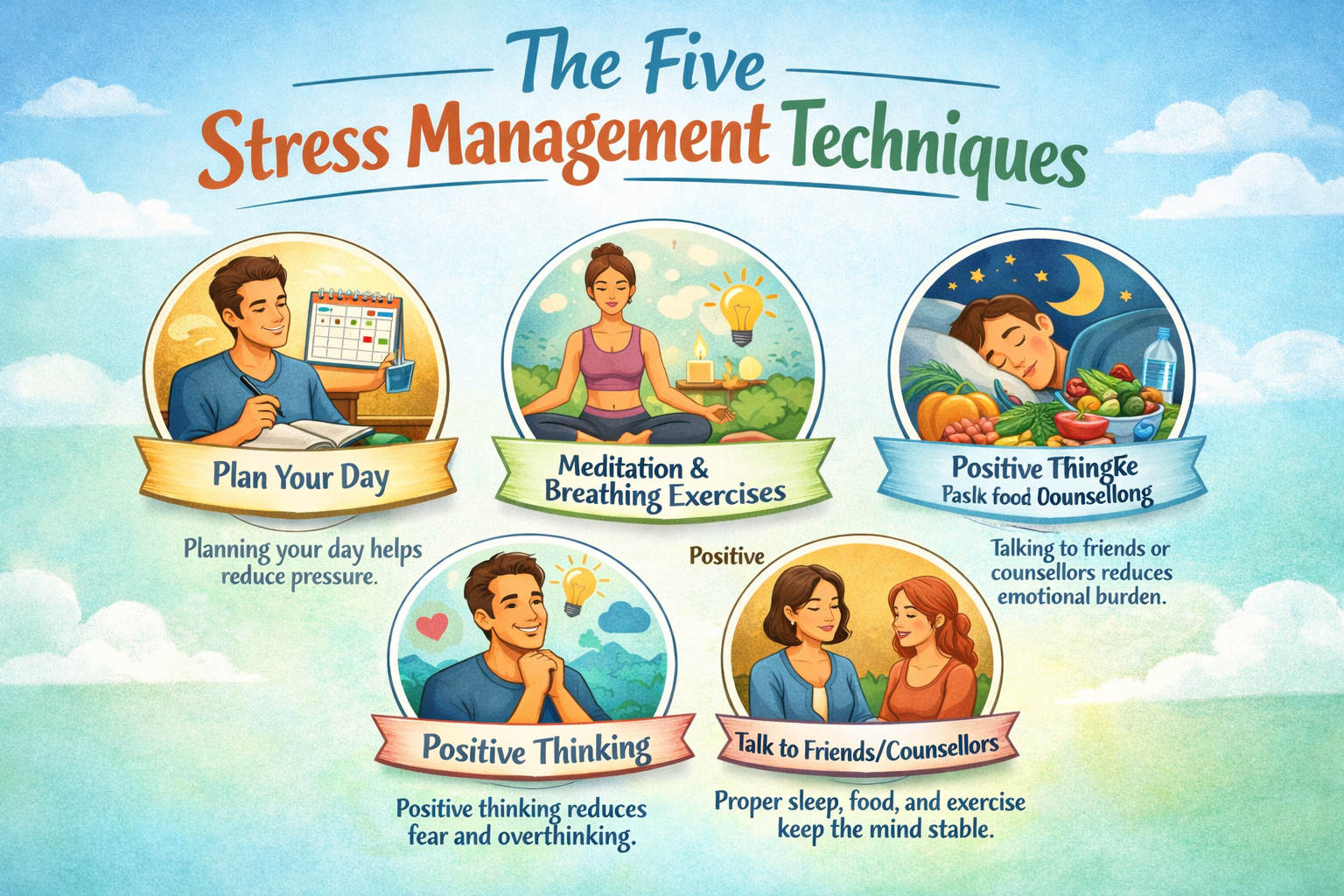
How to Calm Your Mind at Night Naturally
If your anxiety at night is driven by persistent daytime stress, natural calming strategies work best when they address both your evening habits and your daytime stress response. You cannot expect nighttime peace if anxiety and stress go unmanaged all day.
- Herbal teas: Chamomile, ashwagandha, and lemon balm teas reduce cortisol naturally before bed. Avoid caffeinated beverages after 2 PM.
- Gratitude journaling: Writing 3 things you are grateful for shifts the brain's threat-detection mode into safety mode — reducing the intensity of anxious thoughts.
- Cool, dark sleeping environment: A room temperature of 18–20°C and complete darkness signal the brain to release melatonin and begin the sleep process.
- Regular daytime exercise: Physical activity reduces baseline cortisol by up to 30% and promotes deeper, more restorative sleep cycles. Even a 30-minute walk counts.
- Limit news and social media after 8 PM: Fear-based media directly activates the amygdala, worsening negative thinking patterns and making it harder to unwind.
- Talk to someone you trust: Verbalising worries — to a friend, family member, or counsellor — reduces their emotional charge before bedtime.
The Connection Between Anxiety, Depression, and Sleep Problems
Anxiety and sleep problems are bidirectional — each one makes the other worse. When you are anxious, your body releases cortisol and adrenaline, which are the opposite of what your body needs for sleep. Poor sleep then makes your brain more emotionally reactive the following day, generating more anxiety, more negative thinking, and more overthinking the next night.
When depression is also present, this cycle becomes even more entrenched. Depression causes early-morning waking (often 3–5 AM), racing hopeless thoughts, and difficulty returning to sleep. Studies show that people with both depression and anxiety are 3x more likely to experience chronic insomnia compared to those with anxiety alone.
Signs that anxiety or depression is affecting your sleep:
- You take more than 30 minutes to fall asleep most nights
- You wake at 2–4 AM with your mind already racing or feeling low
- You feel exhausted in the morning even after 7–8 hours in bed
- Your mind starts catastrophising the moment you lie down
- Physical symptoms appear at night — racing heart, tight chest, sweating
- You feel a sense of dread or emptiness as bedtime approaches
Treating only sleep problems without addressing underlying depression or anxiety is like treating a symptom without the cause. Professional counselling addresses all three simultaneously — making recovery faster and more lasting.
A Practical Night Routine for Anxious Minds
Consistency is the most powerful tool for rewiring an anxious brain's bedtime response. Here is an evidence-based bedtime schedule designed specifically to reduce overthinking at night and anxiety before sleep:
| Time | Activity | Why It Helps |
|---|---|---|
| 8:30 PM | Stop work emails & social media | Reduces stimulation and fear-based thinking before bed |
| 8:45 PM | Brain dump journal + tomorrow's to-do list | Offloads mental load — brain stops "holding" it through the night |
| 9:00 PM | Herbal tea + dim all lights | Triggers melatonin release and signals nervous system to wind down |
| 9:15 PM | Warm shower or bath | Post-shower body temperature drop triggers natural sleepiness |
| 9:30 PM | Read physical book or light stretching | Occupies the mind with non-stimulating content; releases muscle tension |
| 9:50 PM | 4-7-8 breathing or guided meditation (10 min) | Activates parasympathetic system; slows racing thoughts |
| 10:00 PM | Lights off, phone in another room | No screen exposure; removes temptation to check notifications |
Give this routine at least 14 consecutive nights before evaluating. The brain learns sleep patterns through repetition, not effort.
When Should You Seek Professional Help for Nighttime Anxiety?
Self-help techniques are powerful starting points, but there are clear situations where professional counselling support is not just helpful — it is necessary. You should speak to a counsellor if:
- Overthinking at night has been happening consistently for more than 3–4 weeks
- Sleep problems are significantly affecting your work performance, health, or relationships
- You experience panic attacks, heart palpitations, or intense physical symptoms at night
- You show signs of depression — persistent low mood, hopelessness, or loss of interest
- You have tried self-help strategies consistently but are not seeing improvement
- You rely on alcohol or sedatives to fall asleep
- Your thoughts feel frightening, intrusive, or completely out of control
A trained anxiety and stress counsellor can identify the specific cognitive patterns fuelling your nighttime overthinking, teach you evidence-based CBT and mindfulness techniques, and — if depression is present — create a comprehensive plan that addresses sleep, mood, and anxiety together.
You Deserve Peaceful Sleep Tonight
Overthinking and anxiety at night are not signs of weakness — they are signs that your mind is carrying too much without enough support. The brain is remarkably adaptable. With consistent techniques, the right professional guidance, and a structured approach to sleep, you can break the cycle of nighttime anxiety for good.
Start with one technique tonight — a brain dump journal, 4-7-8 breathing, or simply putting your phone in another room. Small, consistent steps rewire the brain far more effectively than dramatic overnight changes. And if depression or anxiety feel too heavy to manage alone, reaching out to a professional counsellor is always the right decision.
Book a Free Consultation1. Why does anxiety and overthinking get worse at night?
During the day, tasks and stimulation keep anxious thoughts at bay. At night, when external distractions disappear, the brain processes unresolved emotions and fears it suppressed throughout the day. For people with anxiety or depression, this creates a spiral of racing thoughts, catastrophising, and physical alertness that makes sleep impossible.
2. How do I stop overthinking at night instantly?
The fastest technique is 4-7-8 breathing — inhale for 4 seconds, hold for 7, exhale for 8. This activates your parasympathetic nervous system and slows racing thoughts within minutes. Pair it with the 5-4-3-2-1 grounding method (name 5 things you see, 4 you touch, 3 you hear) to anchor your mind to the present and interrupt the overthinking cycle.
3. Can depression cause overthinking and anxiety at night?
Yes — very commonly. Depression activates the brain's threat-detection system, causing it to generate negative, hopeless, and fearful thoughts — especially in the quiet of night. Many people with depression experience their worst symptoms between 10 PM and 3 AM. If nighttime overthinking comes with feelings of hopelessness or emptiness, speaking to a depression counsellor is strongly recommended.
4. Is it normal to have racing thoughts before sleep?
Occasional racing thoughts after a stressful day are normal. However, if it happens most nights and disrupts your sleep regularly, it signals that your stress or anxiety levels need attention. Persistent racing thoughts that prevent sleep for more than 3–4 weeks should be discussed with a mental health professional.
5. What is the best breathing technique for anxiety at night?
The 4-7-8 breathing technique is widely considered the most effective for nighttime anxiety. Inhale through your nose for 4 counts, hold for 7, exhale through your mouth for 8. The extended exhale activates the vagus nerve and lowers heart rate, producing a calming effect within 2–3 breath cycles. Box breathing (4-4-4-4) is another good alternative.
6. What foods help reduce anxiety before sleep?
Chamomile tea, warm milk, bananas (rich in magnesium and tryptophan), almonds, and kiwi fruit have evidence-backed sleep-promoting properties. Avoid caffeine after 2 PM, alcohol in the evening (it fragments sleep after the first 3 hours), and heavy, spicy, or sugary foods within 2 hours of bedtime. A light, nutrient-balanced dinner supports both better sleep and lower overnight anxiety levels.
7. How long does it take for nighttime anxiety to improve?
Most people notice meaningful improvement within 2–4 weeks of consistently practising sleep hygiene and anxiety management techniques. If anxiety is deeply rooted or tied to depression, professional counselling can accelerate the process significantly. The key is consistency — one or two attempts will not rewire the brain, but 14+ nights of the same routine creates lasting neurological change.
8. Should I see a counsellor for nighttime anxiety affecting my sleep?
Absolutely. If anxiety is regularly disrupting your sleep and self-help techniques are not bringing lasting relief, a counsellor is one of the most effective steps you can take. A trained therapist will identify the specific cognitive triggers behind your nighttime anxiety, teach you CBT and mindfulness techniques to break the thought cycle, and — if depression is involved — create a comprehensive treatment plan. Early help leads to faster, more complete recovery.